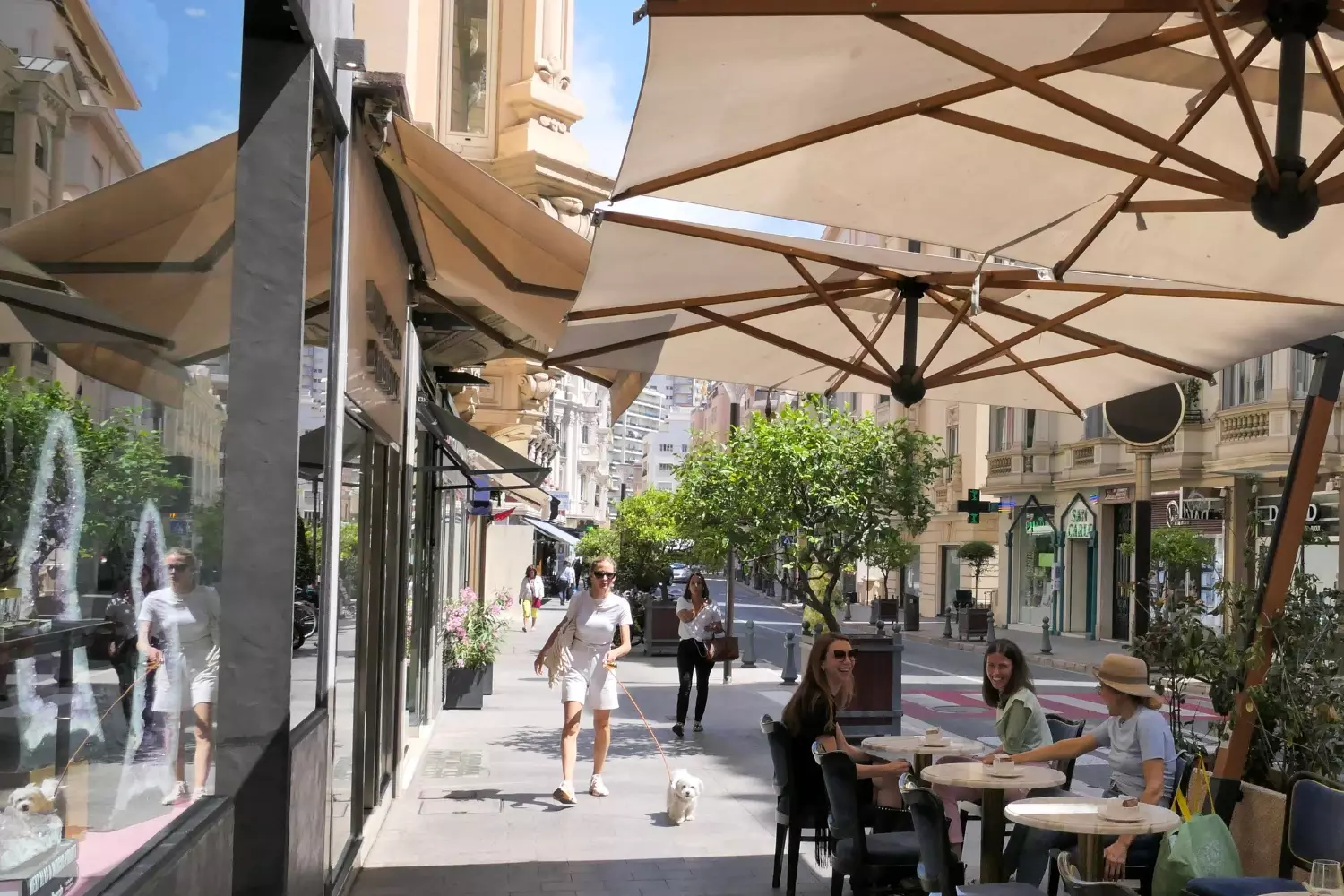
Long favored by wealthy retirees and seasoned investors, Monaco is now seeing its resident population grow younger. Young entrepreneurs, international professionals and families are increasingly choosing the Principality as a place to live and build their careers, drawn by its security, political stability and the long-term value of its real estate.
According to IMSEE, Monaco had 38,423 residents as of December 31, 2024, a slight increase (+0.1%) compared with the previous year.
Despite its small size, the population is remarkably diverse, with nearly 145 nationalities represented, including a strong presence of French, Italian, British and other European residents.
From an age perspective, the distribution highlights a significant share of young adults (18–34 years, ~15.8%) and under-18s (~16.1%), confirming that the Principality is no longer populated solely by older age groups.
A key shift in Monaco’s appeal lies in the influx of young entrepreneurs and international executives, often from the tech, finance or consulting sectors. These profiles choose Monaco not only for tax advantages, but also for its quality of life, political stability and strategic position at the heart of Europe.
Contrary to common assumptions, many new residents do more than optimize their tax situation: they establish local companies, engage in international professional networks and use Monaco as a strategic hub for global activities. This trend is driving growing demand for homes suited to couples and young families, particularly one- and two-bedroom apartments.
Schools and educational infrastructure play a central role in Monaco’s attractiveness for families. The rising number of children and young people is clearly reflected in school enrollment figures, with occupancy rates now at record levels, evidence that more parents are choosing to settle long term.
This residential momentum also highlights a structural constraint: capacity within international schools. As demand continues to rise, supply struggles to keep pace, prompting some families, despite strong purchasing or rental budgets, to reconsider their plans to settle in Monaco.
Located along the waterfront, Larvotto attracts many young households and families thanks to its seaside setting, promenades and modern infrastructure. It is one of the most sought-after areas for those looking to combine urban living with a Mediterranean lifestyle.
- Average price: ~€97,563/sqm in 2024, among the highest in the Principality.
- The area benefits from immediate proximity to schools, services and green spaces, an undeniable advantage for families.
Monte-Carlo and the Carré d’Or appeal to young professionals and families thanks to their proximity to shops, restaurants, international schools and cultural facilities. These central districts are ideal for those seeking urban energy combined with high-end services.
Average prices:
- Monte-Carlo: €53,911/sqm
- Carré d’Or: €70,000 to €100,000/sqm
Iconic residences such as One Monte Carlo, Millefiori or Buckingham Palace in Monte-Carlo, and 26 Carré d’Or, Le Métropole, Les Acanthes or Le Mirabeau in the Carré d’Or, offer modern or prestigious apartments with premium services (concierge, swimming pool, 24/7 security), perfectly suited to families and young professionals.
- La Rousse / Saint-Roman posts an average price of €45,303/sqm, offering well-located apartments, sometimes with sea or panoramic views.
- La Condamine (€53,801/sqm) stands out for its lively neighborhood atmosphere around the port and historic market, appealing to young families seeking a more authentic and vibrant setting.
These districts often provide better space-to-price ratios while remaining close to schools and essential amenities.
- Fontvieille (€53,908/sqm) attracts families with its spacious apartments, green areas and proximity to the port, while maintaining a more residential feel.
- Jardin Exotique (€49,847/sqm) offers tranquility, sea views and a peaceful residential environment, favored by those prioritizing a serene quality of life.
One- and two-bedroom apartments account for over 36% of real estate transactions in Monaco, reflecting strong demand for homes suited to couples and young families.
In central areas such as the Carré d’Or or Monte-Carlo, these formats are often combined with high-end services (concierge, shared amenities, security), appealing to an international clientele.
Monaco’s tax framework remains a major advantage: no personal income tax for residents (subject to certain national criteria), legal stability and a favorable financial environment continue to attract investors and high-potential young professionals.
The Principality also enjoys one of the highest security levels in Europe, a factor increasingly cited by new residents, sometimes even above tax considerations, as decisive when raising children in a safe environment.
Proximity to Nice Airport, easy access to major European cities, and a unique blend of seaside and urban living complete the picture of a destination that goes far beyond a purely patrimonial strategy.
Demand for housing, particularly family-suited properties, continues to rise, putting pressure on an already scarce and expensive supply. Monaco’s real estate market remains ultra-selective, but the arrival of younger profiles is diversifying demand.
Similarly, the relative shortage of places in international schools represents a tangible obstacle for some families, despite a clear willingness to invest or rent in Monaco.
Monaco retains its reputation as a prime destination for international investors and affluent households. Yet its profile is evolving: the share of young adults, active families and entrepreneurs is increasing, partially redefining the Principality’s residential identity.
This rejuvenation, driven by a model combining tax advantages, quality of life, security and international openness, highlights renewed attractiveness, while also underscoring challenges ahead, particularly in education and suitable housing supply.
Monaco no longer attracts capital alone; it attracts lives, projects and new generations shaping its future.
Monaco attracts young professionals and entrepreneurs thanks to its favorable tax environment, security, political stability and central location in Europe, combined with a high quality of life.
Demand is high and international schools quickly reach full capacity. Some families may face difficulties securing places, even with substantial budgets.
Residents are mainly French, Italian, Swiss and German. There is also growing interest from the UK and, more occasionally, from Canada and the United States.
No. Many choose Monaco for its quality of life, security, mobility and the opportunity to establish local professional structures, beyond tax considerations.
One- and two-bedroom apartments are particularly popular, well suited to couples and young families, often rented initially before considering a purchase.
The market is highly selective and properties are rare, but it remains attractive for long-term investors and new residents, especially for family-oriented and young professional housing.
Monaco, a small yet majestic kingdom on the Mediterranean coast, transforms into a true fairy tale every year during the festive season. Renowned for its luxury and elegance, the Principality dazzles with...
Here's a pretty funny name for a residence located right in the heart of the Principality of Monaco. However, it does exist. Château Périgord I was built in 1972, just one year before its twin tower, named...

On barely two square kilometers, Monaco is transforming its transport network to prioritize walking, cycling, quiet buses, and shared mobility. The goal? Reduce car traffic, streamline travel, and offer...

This site is protected by reCAPTCHA and the Google Privacy Policy and Terms of Service apply.
